Air Purification Tips

Air Purification Tips

What are the best plants for air purification?

According to NASA the 12 best house plants for air purification are: Areca Palm, Snake plant, Money Plant, Gerbera Daisy (Gerbera Jamesonii), Chinese Evergreens, Spider Plant, Aloe Vera, Broad lady palm, Red-edged Dracaena or Dragon Tree, Weeping fig, Chrysanthemum and Rubber plant.

Link:  https://iamgreenified.medium.com/12-nasa-recommended-air-purifying-plants-that-you-must-have-in-your-house-8797645054b9

Based on an article by the American Lung Association, they refer to the same recommendations about house plants that NASA does in their 1989 research about air purification.

Link: https://www.lung.org/blog/do-houseplants-really-improve-air-quality

According to the National Institute of Heath’s 2011 study the Areca Palm is the best indoor air purification plant for allergy sufferers. In addition, NASA is also mentioned and agrees with the study from 2011 where the Areca Palm is referred to as the best indoor air plant for removing formaldehyde, carbon monoxide, xylene and toluene from the air. The top 10 best houseplants for allergy sufferers are Peace Lily, Dracaena, Areca Palm, English Ivy, Spider Plant, Golden Pothos, Philodendron, Snake Plant, Rubber Tree, and Dieffenbachia filter toxins from air and keep your indoor environment free of allergens.

Link: https://houseplanthelp.com/houseplants-for-allergy-sufferers/

Is activated charcoal good for air purification?

YES, activated charcoal is good for air purification, but it is limited to removing odors. Activated Charcoal is one of the marvels of the modern age. It is found in vacuum cleaners, ovens, air purifiers, compost pails, and even trash cans. Activated charcoal can remove even the most offensive odors

How does activated charcoal eliminate odors? Activated charcoal in air filters consist of tiny bits of charcoal scattered throughout the filter. Once the charcoal is “activated”, it becomes super porous. This means that a gram of activated carbon can have a total surface area of over 500 square meters. That’s nearly 125 acres of surface per pound of activated charcoal. This surface area amount is important because of how carbon removes impurities from whatever is flowing around it.

The Power of Adsorption

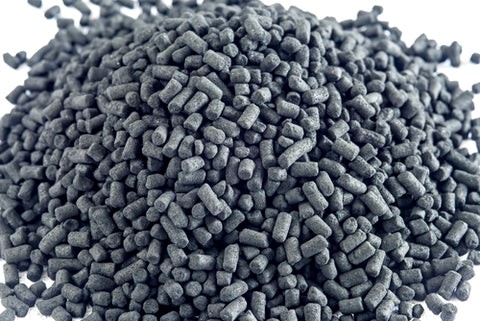
charcoal

Carbon itself is a powerful adsorbing agent (not absorption!). Adsorption refers to the collecting of molecules by the external surface or internal surface (walls of capillaries or crevices) of solids or by the surface of liquids. Absorption, with which it is often confused, refers to processes in which a substance penetrates into the actual interior of crystals, of blocks of amorphous solids, or of liquids. https://www.britannica.com/science/adsorption  With absorption the foreign particles adhere to the surface of the adsorbing agent, they don’t penetrate it. So naturally, the more surface area that a piece of carbon has, the more stuff it can convince to stay with it. https://chemistry.stackexchange.com/questions/15194/why-does-charcoal-absorb-smells-from-the-air-and-where-do-those-smells-go-onc

Take the smell of fish as an example. The smell is caused by oils in the fish. These volatile oils that cause the bad smell are attracted to carbon. When air passes over the activated carbon, the oils stick to it and clean, fresh air flows out.

How is Carbon “Activated?”

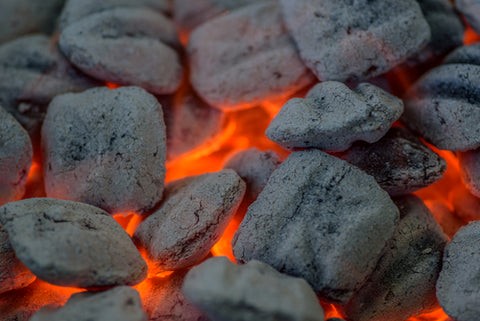
Carbon

Carbon is activated in one of two ways: either physically or chemically.

In physical activation, wood, coal, or any regular carbon source is first heated up to 600 to 900 degrees Celsius (1000 to 1600 degrees Fahrenheit) in a chamber filled with inert gas. The inert gas ensures that the carbon doesn’t burn. Instead, as the carbon is heated, any impurities left on it are vaporized and removed, leaving nothing but pure carbon.

Next, the pure carbon is exposed to oxygen or steam baths at even higher temperatures. This causes the carbon to fracture and form the fractal shapes with their extremely large total surface area.

In chemical activation, raw carbon sources are mixed with an acid, base, or a salt. The mixture is then heated. Chemical activation takes less heat and less time to achieve the end result, which makes it the method of choice for large scale activation.

Activated Carbon improves INDOOR POLLUTION by removing VOC’s (Volatile Organic Compounds) and other harmful pollutants from the air. Indoor air pollution is far more dangerous than outdoor as 90% of our time is spent indoors compared to outdoors.

Activated carbon filters found in air purifiers or air conditioning air filters are best suited to trap particles less than 0.3 micrometers in size, such as tobacco smoke, cooking oil fumes, bacteria, viruses, and volatile organic compounds (VOCs). https://homedetoxing.com/what-do-activated-carbon-filters-remove-from-air/

What essential oil is good for air purification?

Purification Blend

This combination of citronella, lavender, lemongrass, rosemary, myrtle, and tea tree oils are designed specifically to purify your air and keep your home smelling fresh.

Link: https://trueenviro.com/blog/five-air-purifying-essential-oils/#:~:text=Purification%20Blend,keep%20your%20home%20smelling%20fresh.

While essential oils shouldn’t replace your heavy-duty HEPA air filters, they do come with antimicrobial and antifungal properties that can help clear surrounding air ever so slightly. Research supports the idea that they can help inhibit the growth of airborne bacteria while reducing microbial contamination in some cases. Experts listed their go-to essential oils for combating indoor odors and germs. Here are their top picks for oils that can help clear the air at home: 1. Tea tree, 2. Lemongrass 3. Pine Spruce and Fir, Citrus, 5. Ylang ylang. The article also mentions how to use them.

Link: https://www.mindbodygreen.com/articles/essential-oils-that-clear-the-air

Learn More

New Study Confirms It If You Work Out Today Youll Perform Better Tomorrow

New Study Confirms It: If You Work Out Today, You’ll Perform Better Tomorrow

You know exercise is good for you long-term, but do you know how much working out today will improve your performance tomorrow? We all know ...
Read More →
Recovering From Sleep Deprivation Takes Longer Than

Recovering From Sleep Deprivation Takes Longer Than Expected

A recent study investigated how quickly people can bounce back from sleep deprivation. Following 10 days of sleep deprivation and 1 week of recovery sleep, ...
Read More →
Is Alkaline Water Really What It Claims To Be 1

Is Alkaline Water Really What It Claims To Be?

Wander down the bottled water aisle of a supermarket and you will see some products labeled as “alkaline.” Alkaline water producers make some outrageous claims ...
Read More →